
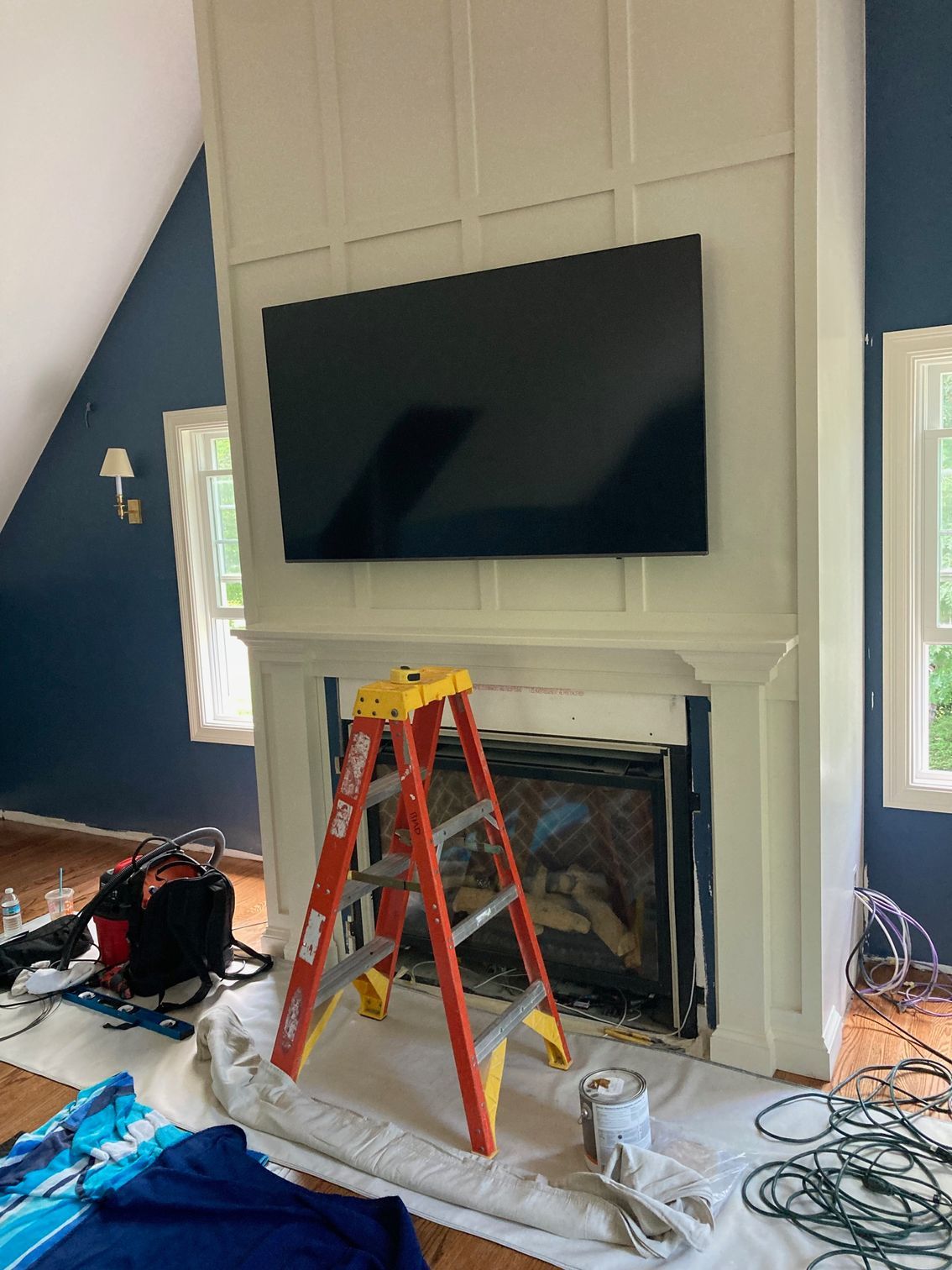
Secure Your Screen With Professional Wall Mounting
TV Mounting in South Hamilton for flat-screen televisions that require secure brackets and accurate positioning to ensure viewing comfort without visible wiring
Becker Media Design handles TV mounting for homeowners in South Hamilton who want their flat-screen televisions installed with secure wall brackets and wiring that disappears behind the wall. You schedule the appointment after purchasing a new television or when redesigning a living room, bedroom, or basement entertainment space. The work requires locating wood studs or installing proper anchors, positioning the bracket at the correct height, and routing cables so nothing hangs exposed down the wall.
Wall mounting attaches your television to drywall, wood studs, or other common residential surfaces using brackets rated for the weight and size of your screen. The bracket allows for tilt adjustments that reduce glare and place the screen at a comfortable viewing angle. Cable management involves drilling access holes, fishing wires through the wall cavity, and connecting power and HDMI cables to outlets installed behind the television. The result is a clean wall surface with no visible cords.
If you are replacing an older television or updating a room layout, contact Becker Media Design to arrange a mounting appointment in South Hamilton.
What Happens During Wall Bracket Installation
You point out where you want the television mounted, and the technician measures the height, marks stud locations with a stud finder, and confirms the bracket will sit level. The bracket attaches to studs with lag bolts, or toggle anchors are used if stud placement does not align with the mounting pattern. Power and video cables run from the television down through the wall to an outlet or media console below.
After the television is mounted and cables are connected, you will see a screen that sits flat or tilted against the wall with no visible wiring. The television turns on, displays the correct input, and stays firmly attached without sagging or shifting. Becker Media Design tests the mount by checking that the television does not move when lightly pressed and that all connections deliver picture and sound.
Soundbar installation and streaming device setup often happen during the same visit. If your wall surface is brick, stone, or metal studs are present, mounting requires different hardware and techniques. The service does not include furniture assembly, electrical outlet installation, or drywall repair beyond small access holes.
Questions About Mounting Your Television
Homeowners in South Hamilton typically ask about wall type, bracket selection, and how wiring stays hidden during installation.
What type of wall surface works best for TV mounting?
Drywall with wood studs behind it provides the most secure attachment, but the bracket can also mount to metal studs or masonry with appropriate anchors and hardware.
How is the mounting height determined?
The center of the screen should sit at eye level when you are seated in your usual viewing position, which typically places the bottom edge of the television 24 to 30 inches above the floor.
Why does cable management require drilling through the wall?
Routing cables inside the wall keeps them out of sight and prevents trip hazards, but it requires drilling entry and exit holes that align with stud cavities and existing electrical boxes.
When should I schedule mounting after purchasing a new TV?
Schedule the installation as soon as the television arrives so you avoid setting it on furniture temporarily and then having to move it again.
What happens if the bracket needs to go where there is no stud?
Toggle bolts or snap-toggle anchors distribute the load across a wider area of drywall, allowing secure mounting between studs for lighter televisions under 55 inches.
If you are upgrading a living room or finishing a basement entertainment area, reach out to Becker Media Design to schedule TV mounting that includes concealed wiring and properly anchored brackets in South Hamilton.
TV Mounting for Drywall, Plaster, Brick & Stone
Not every wall is built the same, and the right mounting method depends on the surface behind your television. Becker Media Design evaluates the wall construction, selects the appropriate mounting hardware, and installs your TV securely while keeping the finished installation clean and professional.
Drywall & Plaster
Drywall with wood studs is one of the most common surfaces for TV mounting. When possible, the mounting bracket is secured directly to the wall studs for maximum strength and stability. If the desired TV position does not line up with the studs, appropriate heavy-duty anchors or other mounting solutions may be used based on the television's size and weight.
Plaster walls require additional care because the surface can be more brittle than modern drywall. We take the wall construction into account when locating secure attachment points and selecting the right hardware, helping prevent unnecessary cracking or damage during installation.
Brick & Stone
Brick and stone walls require a different approach than drywall. Rather than relying on wall studs or drywall anchors, the mounting bracket is secured using masonry-appropriate hardware designed for the specific wall material.
Whether you're mounting a TV above a fireplace, on an exposed brick wall, or against a stone feature wall, we evaluate the surface and mounting location before drilling. This helps ensure the television is securely supported while preserving the appearance of the surrounding wall.
In-Wall vs. Surface Cord Concealment
Once the TV is mounted, the cables can be concealed in two primary ways:
- In-wall cable concealment provides the cleanest appearance. Compatible HDMI and other low-voltage cables can be routed through the wall cavity between the television and the equipment or connection point below. This option works particularly well when the wall construction allows access to the cavity and the installation can be completed without interfering with electrical wiring or other hidden components.
- Surface cord concealment is an excellent alternative when running cables inside the wall isn't practical or when you want to avoid opening the wall. Cables can be neatly routed along the wall using low-profile cable management designed to blend with the wall surface. This approach is especially useful for brick, stone, plaster, finished walls, or other situations where in-wall routing isn't appropriate.
The best option depends on your wall type, the location of existing outlets and equipment, and the look you want to achieve. We'll help determine the most practical way to keep your TV installation secure and your cables as unobtrusive as possible.
Soundbar installation and streaming device setup can be done in the same visit.